
 العربية
VAT Return Filing
In the UAE, VAT returns are typically filed on a quarterly basis, though businesses with higher turnover may be placed on a monthly cycle. All returns are submitted digitally through the FTA’s EmaraTax portal, making the process straightforward and accessible for registered entities.
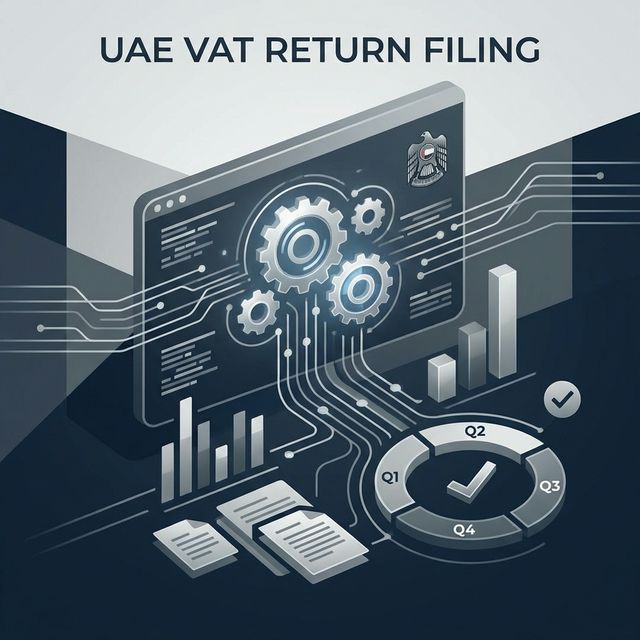
The Return Discloses:
- Taxable supplies made
- Taxable purchases incurred
- Output VAT collected
- Input VAT paid
- Any adjustments, corrections, or special treatments
- Zero-Rated Supplies (0% VAT)
Reverse Charge Mechanism:
- Import of goods into the UAE
- Import of services from abroad
- Supplies of crude/refined oil, hydrocarbons, or energy between registered UAE businesses
Common Mistakes and Penalties
Many businesses incur VAT penalties in Dubai due to avoidable compliance mistakes. Typical errors include:
- Failing to register for VAT on time
- Submitting VAT returns late or with incorrect information
- Misreporting taxable supplies or input VAT
- Delaying VAT payments
- Issuing invoices that do not meet VAT compliance standards
For example, missing the VAT return deadline results in an administrative penalty of AED 1,000 for the first offense, increasing to AED 2,000 for repeated offenses. Ongoing non-compliance can trigger tax audits, additional financial penalties, or even temporary suspension of business activities.
Maintaining accurate records and monitoring filing deadlines carefully is essential to avoid unnecessary penalties and ensure smooth VAT compliance.
Our VAT Filing Services:
01
Registration Assistance
Prepare and submit VAT registration applications to the FTA, including guidance on required documentation.
02
Deregistration Support
Manage the process for businesses no longer meeting VAT requirements, ensuring smooth closure.
03
Compliance Guidance
Advise on maintaining proper invoices, records, and reporting obligations after registration or deregistration.
04
Ongoing Advice
Help businesses understand obligations and avoid penalties associated with late or incorrect registration.
Correct registration ensures legal compliance and avoids fines. Deregistration reduces administrative burdens while maintaining proper record-keeping. Businesses can operate confidently knowing their VAT status is fully compliant.
