 العربية
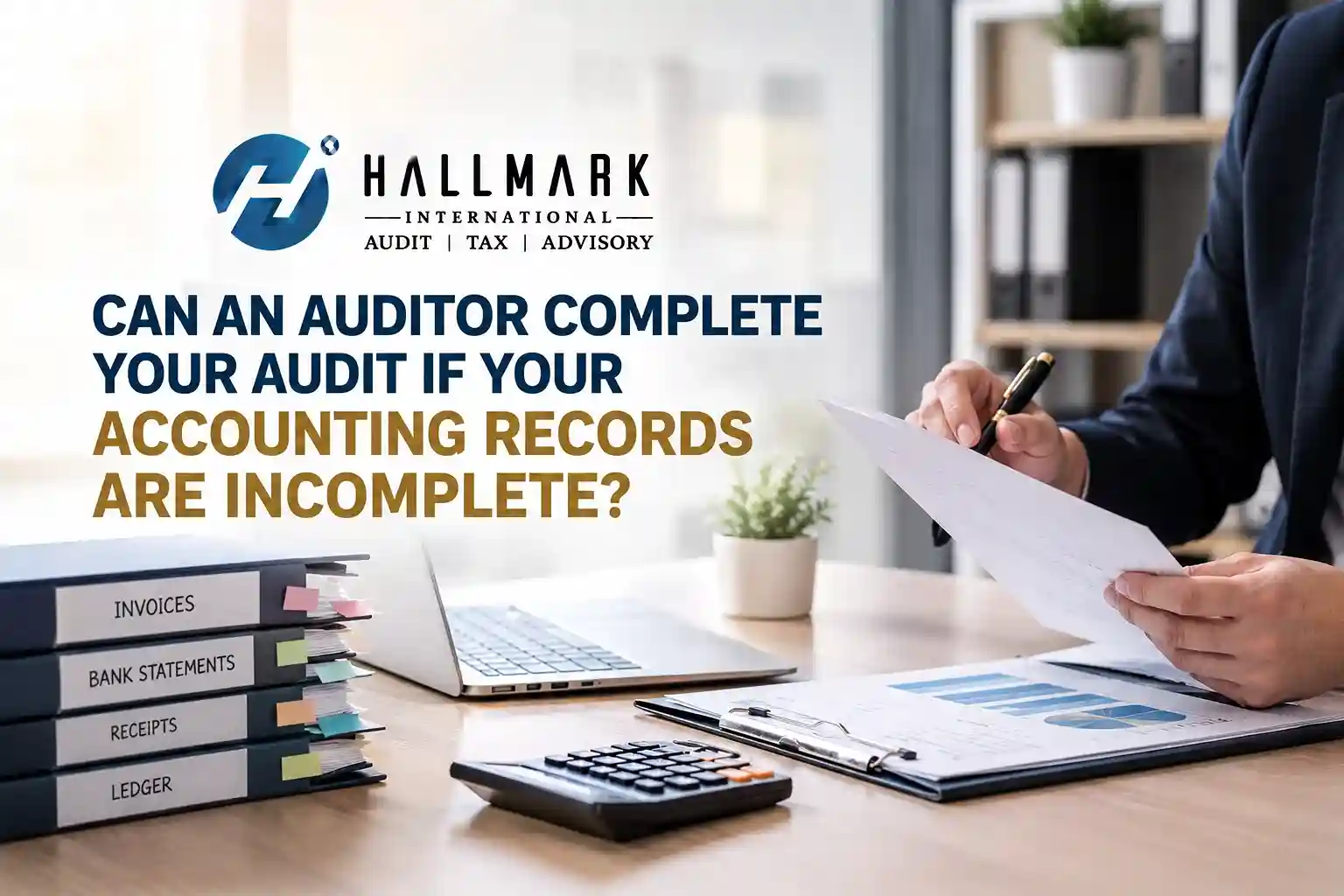
Yes, an auditor can begin reviewing a business with incomplete accounting records, but completing the audit depends on whether sufficient, reliable evidence can be obtained to support the financial statements. Missing invoices, unreconciled bank accounts, incomplete ledgers, or undocumented expenses can delay the audit and affect the auditor’s opinion. For UAE businesses, addressing these gaps early through professional accounting support and a structured audit process can help reduce delays and reporting risks.
Can an Auditor Audit a Company With Incomplete Records?
An external auditor examines financial statements and gathers evidence to determine whether they are presented fairly in accordance with the applicable financial reporting framework. Incomplete records do not automatically make an audit impossible, but they can make it more difficult to verify the company’s financial position.
For example, if a business has missing supplier invoices, the auditor may examine bank statements, purchase orders, supplier confirmations, and other supporting documents. Alternative evidence may help establish whether transactions are genuine and accurately recorded.
However, if important information remains unavailable, the auditor cannot simply assume that the figures are correct. Depending on the significance of the missing evidence and whether it affects a material part of the financial statements, the auditor may need to modify the audit opinion or, in some circumstances, disclaim an opinion.
Businesses that need professional audit services in Dubai should therefore address record-keeping weaknesses as early as possible.
What Accounting Problems Commonly Delay an Audit?
Incomplete records can take several forms, and each creates different challenges during an audit.
1. Missing Invoices and Expense Receipts
When sales invoices, supplier bills, or expense receipts are unavailable, it becomes harder to verify revenue, purchases, and operating expenses. The business may need to retrieve duplicate invoices, obtain supplier statements, or provide other supporting evidence.
Without adequate documentation, certain transactions may remain unverified.
2. Unreconciled Bank Accounts
A company’s accounting balance should be compared with its bank statements to identify missing entries, duplicate transactions, outstanding payments, and unexplained differences.
If bank reconciliations have not been performed throughout the year, the auditor may need additional time to investigate discrepancies and establish accurate cash balances.
3. Incomplete Customer and Supplier Balances
Outstanding receivables and payables must be supported by reliable records. Missing customer statements, disputed invoices, unrecorded credit notes, or supplier balances that do not match external statements can affect the accuracy of the financial statements.
4. Unrecorded Inventory or Fixed Assets
Businesses dealing with physical stock, equipment, vehicles, or property need appropriate records to support their asset balances. Missing stock counts, purchase documents, depreciation schedules, or disposal records can make it difficult to verify asset existence and valuation.
5. Differences Between Accounting and Tax Records
Differences between the general ledger, VAT returns, corporate tax calculations, and supporting documents may require investigation. Not every difference indicates an error, but unexplained discrepancies should be reconciled and documented.
Businesses can review their obligations with Hallmark Auditors’ VAT services and corporate tax services where relevant.
What Can an Auditor Do When Records Are Missing?
An auditor can perform additional procedures to obtain sufficient appropriate audit evidence, provided suitable evidence is available. Depending on the circumstances, these procedures may include:
- Reviewing bank statements and transaction histories.
- Requesting confirmations from customers, suppliers, banks, or other third parties.
- Examining contracts, purchase orders, delivery notes, and payment receipts.
- Testing transactions recorded before and after the financial year-end.
- Reviewing inventory records and attending stock counts where appropriate.
- Investigating unusual transactions and reconciling conflicting financial information.
These procedures can help recover evidence and identify errors that would otherwise remain unnoticed.
However, an audit is not a substitute for bookkeeping or accounting reconstruction. The auditor must maintain independence and cannot simply create missing accounting records on behalf of management and then independently audit their own work. The company’s management remains responsible for preparing accurate financial statements and maintaining adequate records.
What Happens If Your Business Cannot Provide Enough Evidence?
The outcome depends on the extent of the problem and whether alternative audit procedures resolve it.
If the auditor obtains sufficient evidence and any identified errors are corrected appropriately, the audit may proceed towards an unmodified opinion, subject to the results of the entire audit.
If material misstatements remain in the financial statements, a qualified or adverse opinion may be appropriate, depending on their significance and pervasiveness.
If the auditor cannot obtain sufficient appropriate evidence, a qualified opinion or disclaimer of opinion may be necessary, depending on how significant and widespread the potential effects are.
Incomplete records can also increase the time and cost required to complete the engagement. Where a company must submit audited financial statements to a free zone authority, lender, investor, or another stakeholder, delays may create additional operational or compliance concerns.
The exact consequences depend on the company’s legal structure, applicable regulations, contractual requirements, and the circumstances of the audit.
How Can You Prepare Incomplete Accounting Records Before an Audit?
If your company has fallen behind on its accounting, taking a structured approach can help improve audit readiness.
Step 1: Gather All Available Financial Documents
Collect bank statements, sales invoices, purchase bills, expense receipts, payroll records, customer statements, supplier statements, contracts, and previous financial statements. Digital copies can be useful when original documents are unavailable.
Step 2: Reconcile Bank and Ledger Balances
Compare bank statements against accounting records and investigate differences. Review customer and supplier balances, outstanding payments, and unusual transactions.
Step 3: Identify Missing Transactions and Supporting Evidence
Prepare a list of missing documents, unrecorded transactions, and unexplained balances. Contact relevant banks, customers, suppliers, or employees to obtain supporting evidence where possible.
Step 4: Correct Accounting Errors Transparently
Adjustments should be supported by documentation and approved through appropriate procedures. Avoid creating unsupported invoices, changing historical entries without explanation, or guessing missing amounts.
Professional financial statement preparation services can help businesses organize accounting data, reconcile balances, and prepare financial statements for review.
Step 5: Speak to Your Auditor Early
Explain the condition of your records before fieldwork begins. Early communication allows the auditor to understand the potential limitations, identify the information needed, and discuss a realistic audit timetable.
For additional guidance, read Hallmark Auditors’ article on how to prepare your company for an external audit.
Can Accounting Outsourcing Help Make Your Business Audit-Ready?
Yes. Professional accounting support can help businesses rebuild missing records where sufficient source information is available, reconcile accounts, organize supporting documents, and prepare accurate financial statements.
For companies without a dedicated finance team, outsourced accounting services in Dubai can provide ongoing bookkeeping, transaction recording, reconciliations, and reporting support. Maintaining these processes throughout the year can reduce the pressure of preparing for an audit at the last minute.
Hallmark Auditors can help businesses assess their accounting requirements and identify appropriate audit and accounting support. Where accounting records need substantial correction, the work should be appropriately separated from the independent audit to protect auditor independence.
Frequently Asked Questions
Can an auditor reject a company’s accounts because records are incomplete?
An auditor does not automatically reject accounts simply because some documents are missing. The auditor evaluates whether sufficient appropriate evidence can be obtained. If material issues cannot be resolved, the audit opinion may need to be modified.
Can an audit be completed using bank statements alone?
Usually, bank statements are not enough to verify every aspect of a company’s financial statements. They provide useful evidence of cash transactions, but additional documentation may be needed to verify revenue, expenses, liabilities, inventory, fixed assets, and other balances.
Will incomplete accounting records increase audit fees?
They can. Missing documents, unreconciled accounts, and unexplained transactions may require additional audit procedures and more time. The actual fee impact depends on the volume and complexity of the work.
Should I hire an accountant before hiring an auditor?
If your records are significantly incomplete, accounting support before the audit may be beneficial. An accountant can organize transactions, reconcile accounts, and prepare financial statements, while an independent auditor evaluates the resulting financial statements and supporting evidence.
What should I do if my audit deadline is approaching?
Contact your auditor immediately, gather all available documents, identify missing records, and prioritize critical reconciliations. Do not assume that an extension is automatic; check the relevant authority’s requirements and discuss the timetable with your auditor.
Get Your Business Ready for an Audit With Hallmark Auditors
Incomplete accounting records do not always prevent an audit, but leaving gaps unresolved can create avoidable delays, additional costs, and uncertainty over the audit opinion.
Hallmark Auditors supports UAE businesses with audit and assurance, financial statement preparation, and outsourced accounting services. Whether you need help understanding your audit requirements or organizing your records before an audit, our team can discuss your situation and recommend an appropriate next step.
Contact Hallmark Auditors to discuss your audit requirements and get your business’s financial records ready for review.